
Coloring books started for adults long before children claimed them. Early versions appeared in the 1600s with engraved maps in poems like Poly-Olbion, where aristocrats hand-colored fantastical creatures for practice in art skills. By the late 1800s, lithography made production cheaper, leading to the first popular children's coloring book around 1880, the Little Folks Painting Book. Yet the concept began as a tool for grown-ups to learn painting techniques accurately.
Explosion in Adult Popularity
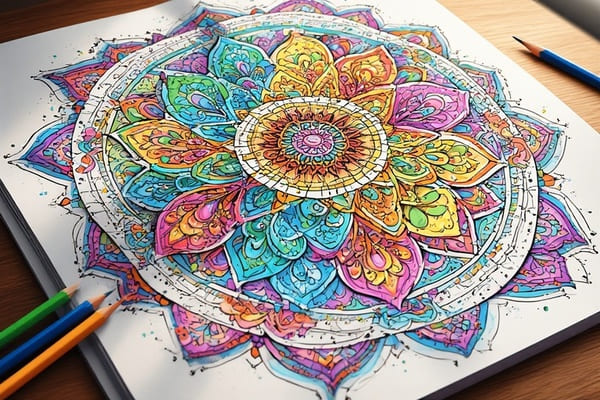
In 2015, adult coloring books sold over 12 million copies in the United States alone, topping bestseller lists. This boom repeated trends from earlier decades, with sales surging again during recent stressful times. Patterns like mandalas and intricate designs draw people seeking calm, turning a childhood pastime into a widespread relaxation method.
Studies show coloring lowers cortisol, the stress hormone, often within minutes. One experiment found participants experienced reduced anxiety after coloring complex shapes for just 20 minutes. Another revealed mandala coloring calmed university students facing exams. The repetitive motion shifts focus away from worries, calming the brain's fear center while boosting creative areas.
Hidden Benefits for All Ages
Coloring supports multiple growth areas backed by research:
- Lowers anxiety and depression symptoms in structured sessions.
- Improves fine motor skills and hand-eye coordination.
- Enhances mindfulness, similar to meditation practices.
- Reduces cortisol levels for measurable relaxation.
- Boosts positive mood and sense of accomplishment.
- Aids emotional expression without words.
- Strengthens focus and concentration spans.
These effects appear in children building skills and adults managing daily pressures.

Therapy Tool in Practice
Psychologists like Carl Jung prescribed mandala coloring to patients for relaxation and self-discovery decades ago. Modern art therapists use it for trauma processing, anxiety management, and mood improvement. Hospitals provide coloring pages to ease patient distress, while schools incorporate them for focus breaks.
Returning to crayons evokes simpler times, offering a break from screens. Adults report feeling grounded, with some studies linking it to better sleep when done before bed. The non-judgmental nature allows mistakes without consequence, building confidence through completed pages.
Unexpected Historical Twists
Early coloring books tied to education reforms, aiming to give children advantages through interactive learning. During the 1930s, crayon production became a massive industry as coloring peaked in popularity. Even subversive adult versions emerged in the 1960s, satirizing daily life.
For fresh pages to try these effects, check Our printable coloring pages on coloring center, covering themes from nature to patterns.
Coloring pages pack more impact than meets the eye, blending history, science, and daily relief. From ancient maps to modern therapy, this activity continues surprising with proven depth.