
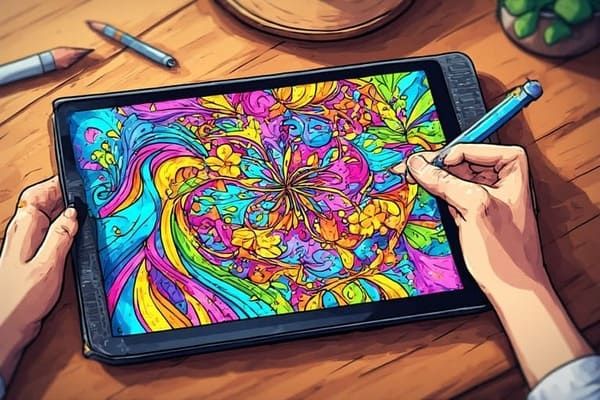
In today's world, where being environmentally conscientious has never been more important, finding environmentally sustainable ways to express your creativity has become a priority for many. Digital coloring, a trending activity on online platforms, is an engaging and environmentally helpful alternative to art in its physical form. Not only does color digitally allow you to tap into your creativity, but you are also doing your part to help create a greener planet. This article will examine why digital coloring is a sustainable alternative and how being eco-conscious aligns with assuming greener lifestyle choices, making digital coloring a great option for illustrators of all ages.
What Makes Digital Coloring An Eco-Conscious Pursuit?
Digital coloring allows you to eliminate the use of physical materials and is also a great way to lessen your environmental footprint. The resources used in physical coloring (paper & pencils, etc...) cannot be compared to what is needed in digital platforms, which contain a virtual canvas right on your device. Here is why that matters:
- Zero Paper Waste: Classic coloring books waste paper which ends up as waste contributes to deforestation and energy-intensive production. Digital coloring consumes no paper, which prevents forest loss and avoids land fill waste.
- No Physical Supplies: Typical colored pencils, markers and paints usually are in plastic and have a limited life span which contributes to waste. Digital tools, like brushes or color palettes, do not exist in the physical world, and don’t require replacements.
- Reduced Carbon Footprint: The supply chain manufacturing and shipping of art supplies contributes to a large amount of carbon emissions, therefore when coloring digitally there is no shipping of art supplies, therefore there is no travel or production related pollution.
By committing to digital coloring, you are making a conscious choice to lower your environmental footprint while allowing yourself an opportunity to be creative.
The Environmental Impact of Conventional Art Supplies
While we adore traditional art supplies, they come at an environmental cost that most people do not think about. According to the Environmental Paper Network, paper production is responsible for roughly 1% of the world's greenhouse gas emissions. In addition, crayons, markers, and paints (just as a few examples) contain chemicals that can negatively impact ecosystems if not disposed of in an environmentally conscious way. As just a few potential examples:
- Deforestation: the paper industry accounts for the most forest loss, as millions of trees are being cut down and made into various paper goods like coloring books
- Plastic Waste: many supplies are made of non-recyclable plastic encasements (like markers and paint), adding to the ever-growing issue of plastic waste.
- Chemical Runoff: not properly disposing of paints or markers, for example, can lead to chemical runoff into bodies of water and harm our aquatic systems.
Digital coloring eliminates these problems altogether. By coloring using an online platform, you have avoided some major contributors to deforestation, plastic pollution, and chemical pollution, so it is a sustainable option for eco-minded creative types.
How Digital Coloring Supports Sustainability
Digital coloring is not only an alternative that reduces waste, but it is also a way to encourage sustainable practices in different ways. Most online coloring platforms are purposeful about their designs so they are accessible, reusable, and eco-friendly. Here are some specific examples:
- Reusable Canvases: Unlike a traditional coloring book, that can only be used once, the digital coloring pages can be reused forever. At any point, you can reset your canvas, use different color combinations, or try out different styles and recipes, and you do not waste anything.
- Energy Efficient Platforms: A lot of online coloring platforms are hosted on energy-efficient servers. Some platforms are hosted on servers that use renewable energy, so you are minimizing the environmental impact every time you create, while using less energy.
- Widespread Access: Digital coloring is available to everyone with an internet connection. You are minimizing lengthy, fuel-intensive distribution and shipping networks to get the product into your hands.
Digital coloring is a creative process that supports sustainability, from beginning to end.
Conclusion
Digital coloring may just be a fun and exciting hobby, but it is also an environmentally-friendly form of creativity. The many advantages of not consuming precious resources like paper, plastic, and supplies, it is a great way to engage in environmentally conscientious, sustainable creativity! There is no need to ignore the term “art” when we engage in digital coloring practices. Digital coloring is a way to “go green” with our creativity, no matter if you are a casual artist or someone who actively uses their creativity. Just remember, it is so easy to negatively impact the environment or not add or value to it, and you don't have to!
So get on your computer, tablet, or mobile device and start exploring coloring designs. Then color your way to a better planet!