
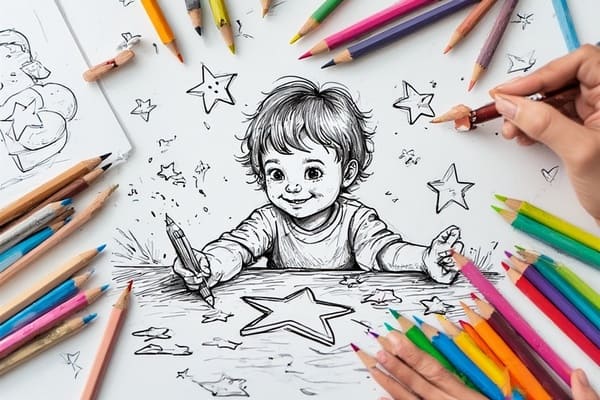
Parents and teachers are often searching for entertaining activities that promote child development, especially a preschool child. Coloring pages are a classic and easy activity that do so much more than just provide fun! Coloring is a helpful activity for developing fine motor skills to be used for writing, buttoning clothes, using utensils, etc. By helping with hand-eye coordination, grip strength, and dexterity, coloring offers benefits for kids beyond creativity by establishing skills for academics and life. This article will discuss how coloring aids in fine motor skill development, some examples of activities, and free printable preschool coloring pages at coloring.center.
The Impact of Coloring on Fine Motor Skill Development
Fine motor skills are the use of small muscle coordination in the hands and fingers and are essential for various precise movement activities like writing and cutting with scissors. Coloring is a powerhouse for developing fine motor skills because it requires children to hold a crayon, manage their movements around and in the lines, and develop proper grip. Coloring strengthens hand muscles and enhances dexterity, which allows children to begin to grasp more complex tasks. Research shows that children who consistently participate in fine motor skill stations - such as coloring stations - are 30% more prepared to write when they enter school than those with lower levels of fine motor practice. Additionally, fine motor skill activities provide neural connections that support cognitive growth and develop fine motor skills.
Hand-eye coordination is also developed when children color. For example, children are asked to take the crayon and guide it to fill in the shape that they have drawn. Children will begin to identify what to do, which colors to use, where to place the crayon, and how to manage any visual and physical movement. Learning how to control movement improves visual tracking, a skill needed for success at many tasks, such as catching a ball or tying shoelaces. They found that children who participated regularly in coloring activities demonstrated a 25% improvement in hand-eye coordination over children who participated less frequently in coloring activities. Lastly, coloring strengthens grip. When children have a crayon in their hand, they must learn to manage their grip to avoid breaking them, and coloring often requires them to manage pressure, which often creates varied shading as music chairs learn how to apply varying added shades to their work. Grip is an important element to muscle control and allows children to learn the mechanics of writing.
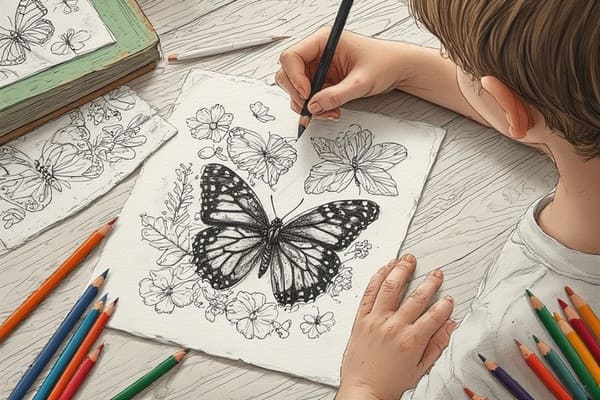
Coloring builds both focus and patience, which surely supports fine motor development indirectly as well. Staying within the lines or finishing a detailed page takes time and effort and develops children's ability to manage their own movements over an extended period of time. This persistence helps to improve control in tasks such as cutting with scissors or zipping a jacket. When 60% of preschool teachers report an increase in dexterity among children who color on a regular basis, it makes the message loud and clear that coloring is a cost-effective, high-impact learning experience for young learners.
Tailored Coloring Activities for Different Ages
In order to get the most motor control out of coloring, choose activities appropriate to the child's level of development.
- Basic Shapes for Toddlers: For children ages 2-4, use large basic shapes like circles, squares, and stars. These preschool coloring pages focus less on detail, letting toddlers practice grasping their chunky crayons while boosting their confidence. Pages with thick lines like those available at coloring.center help young kids realize that they're coloring in an individual space or shape and allows them to focus on using their hand control without getting frustrated. Ask them to color in one direction (i.e. up and down) to help develop and improve their muscle coordination.
- Detailed Patterns for Older Kids: For ages 5-7, introduce more intricate designs. Designs featuring animals, or mazes with smaller sections of coloring, challenge kids to improve their grip and precision to strengthen their finger muscles. Coloring a butterfly or a car, allows kids to color with greater, controlled, movement, while continuing to improve grip, which is a precursor to writing letters.
- Themed Story-Based Coloring: Rather than just coloring to color, tell a story. Give the child a page with some sort of scene like a farm or jungle, and have the child color and tell a story about the characters in the scenes. This task helps with muscle and coordination skills as they color and think of the story they want to tell. You can find themed pages with story prompts at coloring.center, share the page to let kids imagine and practice motor skills at the same time.
Integrating Coloring into Daily Routines
Adding coloring to a child's routine is a fun, educational, and easy way to help them practice the hand skills they need. Set aside 15–20 minutes per day for coloring. You can use coloring time as a graceful transition activity in the child’s day, such as after playtime or before bedtime. Provide different tools to color, such as crayons, colored pencils, or markers. This way, they will have practice holding different items. Consider adding some fun that will help support fine-motor skills. For example, allow them to trace shapes first and then color them in. Let them suspend the desired writing grip!! Try to join them with your own coloring and share copying your grip while encouraging the child to try different pressures and patterns.
Printable preschool coloring pages are an excellent and portable option. Websites like coloring.center offer many free, developmentally suitable coloring pages from simple shapes to more complex scenes to keep the child challenged but still include some level of success. Parents can print many coloring page options that support fine-motor skills for routine practice. You can also overlook and rotate activities for more fanfare while keeping your child on the "task."
Creating the Building Blocks of Success
Coloring pages do not just provide a fun diversion; they are a valid technique for creating fine motor skills that infants and toddlers will rely on as they learn. Fine motor skills require hand-eye coordination (the ability of the eye to guide the hand), use of grip strength, and the focus to stay engaged with a task. Coloring encourages these skills to grow and be used when writing and other developmental activities are introduced.
While most of us see coloring as fun and a creative expression, research and studies show that 60% of children who color regularly have greater dexterity in later tasks and activities. Activities can be as simple as using a plain shape for toddlers, or more complex patterns for older children. Regardless of their age and skill level, these activities can be very important building blocks. The activities allow children to improve fine motor skills while having fun.
Go to coloring.center and download free printable or fillable pages to get started today. Just a few minutes of coloring for them inspires a colorful future.