
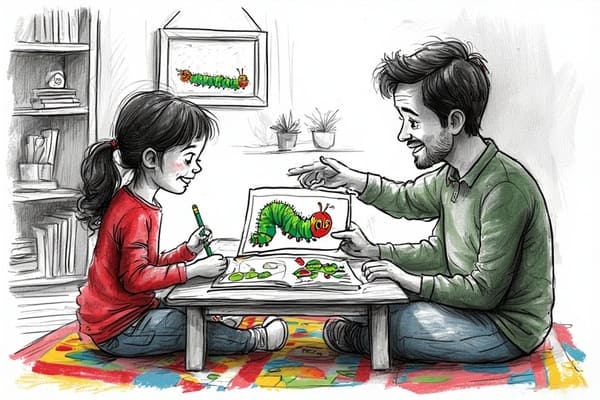
Incorporating story time coloring activities with reading is a fun, practical way to encourage literacy skills in young children. Parents and educators are constantly searching for imaginative ways to encourage a love of reading in kids; literacy crafts for kids, such as printable book coloring pages, provide a nice, tactile way to enhance the kid's story time experience. Pairing coloring pages with children's books like The Very Hungry Caterpillar or Where the Wild Things Are can expand discussion about the story, provide a way to re-cap comprehension, and promote creativity. This article shares how to embed story time coloring activities into your reading practice, as well as shares practical ideas to support literacy development.
Why Coloring Pages Support Story time?
Book inspired coloring pages help kids connect to the story at a deeper level. When children color characters or settings from a story, they are visualizing and thinking about the story, which will ultimately support them in their understanding of the story and recalling details. Literacy crafts for kids encourage children to engage and sprout their own conversations about a story, and are also useful when connecting an abstract concept in a book into something more concrete. Coloring helps develop children's fine motor skills, which are necessary as they begin writing skills. Literacy researchers and experts in their field express that when children do a creative activity in concert with reading, vocabularies, critical thinking skills and emotional connections to stories are enhanced.
Selecting the Right Coloring Pages to go with Books
Having printable book coloring pages that go along with a book makes it educationally valuable. Look for printable book coloring pages that show important characters, places or concepts found in the book. For example, The Very Hungry Caterpillar coloring pages might be of the caterpillar eating through fruits, while Where the Wild Things Are would include a wild creature or Max’s boat etc. Choose printable book coloring pages with outlines that are bold if you are working with younger kids ages 3-5 using a few crayons. For older kids ages 6-8, choose pages that have less bold outlines and more details for the kids to color inside the lines and use more than a few crayons.
How to Pair Coloring with Story time?
Integrating coloring activities during story time is great and not hard to implement! Here are the steps to help support your use of coloring during story time.
- Read the Story First - Start with reading the book aloud. Use different voices and stop to discuss important elements in the story. For instance, while reading The Very Hungry Caterpillar, ask, "What do you think the caterpillar feels when he is hungry?" You want to set up color time with this!
- Give Them Their Coloring Page - Get a printable book coloring page that relates to the story. If reading Charlotte's Web, hand out a page that has a pig or spider web coloring page. Discuss with the children how the page relates to the book. While coloring, ask them to remember things they liked from the book or important details.
- Ask Reading Questions While Coloring - Start asking questions as the children color! For example, the question could be, "What colors would you use for Charlotte's web?" or "How does Max feel here in the story?" Questions like these support comprehension of the story and allow the children time to express their ideas! This time will give children an opportunity to learn vocabulary and critical thinking!
- Complete Art Activity - Once the children finish coloring, you can have them retell the story related to their page. The child will use their page to help them tell the story. This activity will encourage narrative discourse skills and confidence. Alternatively, you could have the child draw or color a different ending to the story!
Reading Prompts to Encourage Discussion
To enhance the benefits of literacy-based coloring prompts in story time, make a point to ask open-ended questions throughout or at the end of the coloring activity. Some to consider may include:
- “What was your favorite part of the story and how can you represent that in your drawing?”
- “Why do you think the character did what they did? What colors represent their mood?”;
- “Can you retell the story, based on your coloring activity?”
These fun questions will help spark reflection about the story, storytelling practice, and a connection to emotion, while also having fun literacy crafts for kids.
Closing Remarks
Connecting coloring activities with reading can be an effective way to grow literacy skills while also adding to the fun of learning. Utilizing printable book coloring pages provides a variety of opportunities to extend story discussions, reinforce understanding, and build a love of reading. Download our free printable literacy crafts for kids to get more ideas for linking coloring to story time. Enjoy watching your child take flight in literacy skills and imagination!