
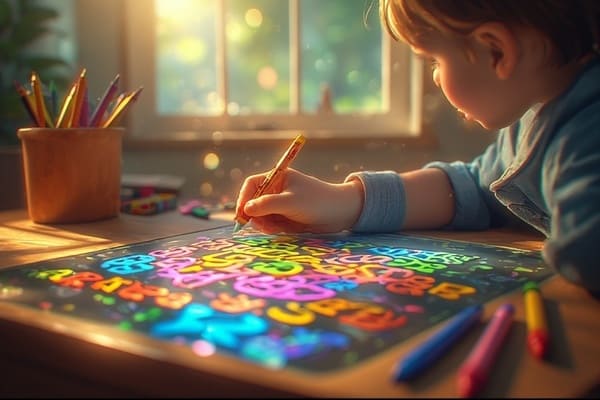
Every parent remembers that proud moment when their child first picks up a crayon and scribbles a chaotic, colorful mess across a piece of paper. It looks like play, but beneath the surface, something incredible is happening. Those early scribbles are the first steps toward academic success.
As we move further into the digital age, the way children develop "fine motor skills", the small, precise movements of the hands and fingers, is changing. At Coloring.center, we see every day how the simple act of choosing a color and filling a shape helps bridge the gap between early play and classroom readiness.
The Secret Workout for Little Hands
Writing your first letters in school isn't just a mental challenge; it’s a physical one. To hold a pencil correctly, a child needs strength in the tiny muscles of their palm and fingers.
When a child colors, they are practicing:
- Grip Strength: Learning how to apply the right amount of pressure, so a color shows up without snapping the crayon or tearing the paper.
- Hand-Eye Coordination: Navigating a tool (whether it’s a physical marker or a digital stylus) to land exactly where the eye intends.
- Dexterity: Moving the wrist and fingers independently to fill in small corners versus large open spaces.
While it feels like fun, your child is actually performing a complex "workout" that will eventually make learning to write their name much easier and less frustrating.
From Screen to Paper: A Modern Approach
There is often a debate about "screen time vs. paper time." However, the modern classroom uses both. Using an online coloring tool can be a fantastic "bridge" for a child who might find a blank piece of paper intimidating.
On our site, a child can experiment with an "Undo" button if they go outside the lines. This reduces the "failure anxiety" that often makes kids give up on drawing. Once they build confidence online and understand how colors work together, printing out those same favorites to color with physical pencils becomes an exciting next step rather than a chore.
Building the "Focus Muscle"
School readiness isn't just about physical skill; it’s about the ability to sit still and finish a task. In a world of fast-paced cartoons and 15-second videos, coloring is "slow entertainment."
When a child commits to finishing a picture of a dinosaur or a space shuttle, they are practicing delayed gratification. They learn that a beautiful result requires time and persistence. This translates directly to the classroom, where they will soon be asked to focus on a teacher’s lesson or complete a worksheet from start to finish.
3 Simple Ways to Use Coloring for School Prep
To turn coloring time into a developmental boost, try these three strategies:
- Talk About the "In-Between": Ask your child why they chose a specific color. This develops vocabulary and cognitive categorization (e.g., "I used green because it's a leaf, and leaves are green").
- The "Boundary Challenge": Encourage them to try and stay inside the lines for just one small part of the image, like a character’s eyes or a flower petal. This builds precision without being overwhelming.
- Mix the Mediums: Start a project on the tablet or computer at Coloring.center to pick the perfect color scheme. Then, print the image and ask them to try to recreate those same colors using real-world crayons. This reinforces "color memory."
Confidence is the Best Result
Perhaps the most important thing, coloring provides is a sense of accomplishment. When a child finishes a page, they have created something that didn't exist before. They can see their progress, and they can share it with you.
That boost in confidence, the feeling of "I can do this", is exactly what they need on their first day of school. So, the next time you see your child deeply focused on a coloring page, know that they aren't just "playing." They are training for the big adventures ahead.