
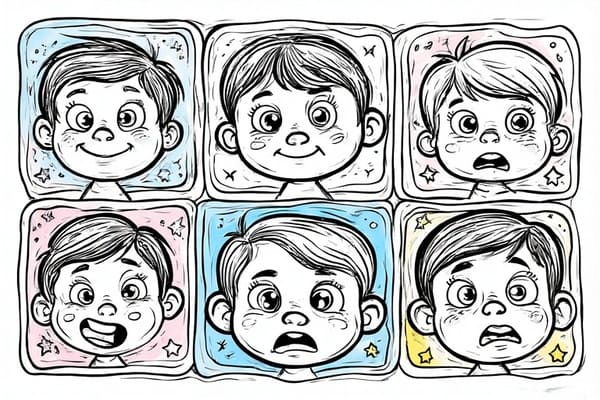
Helping kids learn to identify and communicate about emotions is a major part of healthy child development! The process of helping children gain emotional knowledge is filled with possibilities for fostering emotional intelligence development, hence doodle pages fun, printable children's activities for social emotional learning, are a great way to do both.
Through coloring pages with character's facial expressions, or emotion based stories/characters, children's coloring pages will readily allow children to examine, name and talk through emotions including more complicated feelings. This article will consider the best way to use coloring pages to learn about emotions, and good activity ideas for getting started.
Why Will Doodle Pages be Productive for Emotional Learning?
Coloring pages and coloring books are a commonly used children's activity that requires very little effort. Coloring is a fun activity that inspires creative and imaginative expression, and give kids a chance to share, while increasing focusing and fine motor skills. When coloring is used for emotional learning, doodle pages will also provide a different structure and organization, so kids can process complex feelings about emotions. For example, coloring pages with facial expressions (happy, sad, angry and/or surprise faces) provide kids with a concrete visual way to think about emotions. Likewise, coloring pages about pretend animals or individuals have events that a child can relate to and provide context to talk about how a character may feel a certain way. Together, the combination of art and media make topics, like emotions, much more meaningful concepts to a young learner.
In addition, coloring encourages focus and relaxation, providing a safe environment for children to express those moments of emotion. Child development experts report that early knowledge and awareness of emotions contribute to social skills, empathy, and self-regulation when it comes to managing emotions. By mixing emotional learning lesson plans for kids into coloring, you can make the experience educational and fun.
How to Use Coloring Pages to Teach Emotions
Below are some examples of how you can incorporate coloring pages with social skills into these emotional learning objectives:
- Facial Expression Coloring Pages - Use printable color sheets that illustrate different facial expressions. For example: give children a page with a "happy" face and ask them to color that page while talking about what makes them feel happy. Ask additional questions afterward like "What does a happy face look like?" or "Can you show me your happy face?" This connects what they see to what they experience.
- Character Pages Featuring Stories - Select coloring pages that display characters in a situation (e.g. a child sharing a toy; a character appearing sad after losing the game) and while children color, ask open-ended questions. Questions such as, “Why do you think this character is sad?” or “What would you do to help them feel better?” will spark discussions involving empathy and problem-solving.
- Coloring Pages Based on the Theme of Emotion - Download or create a set of coloring pages based on a particular emotion. For example, you might have happy, sad, angry, and scared; assign one page to each emotion, prompting the children to color while reviewing a personal experience involving that feeling. Again, this reinforces a vocabulary of feelings and self-awareness. See what Twinkl has for free or purchased packs based on the theme of emotion.
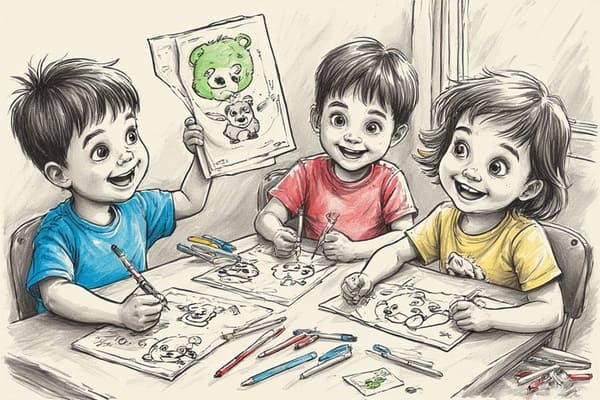
- Group Coloring Experience - Host a group experience where children color the same coloring page and share and discuss how the character feels about that experience. Children will exercise social skills and learn from peers in order to identify feelings. For example, one child may color the “surprised” face blue to express “calmness” while another child colors the surprised face red to express “excitement”. Discussing these decisions supports the understanding about feelings can mean different emotions.
Ideas for Learning Activities
- Emotion Matching Game: You can take a colored page and emotion flashcards and ask the kids to match the colored page to the correct emotion card after coloring it.
- Story Creation: The child can color a character, then create a short story about why the character is feeling that way. This will help build narrative and emotional skills.
- Emotion Journal: You can combine coloring and journaling by asking the child to write or dictate a sentence about a time they felt the emotion they colored.
Guidance for Parents and Educators
- Use Age-Appropriate Designs: For younger children (ages 3-5), choose simple design pages with bold lines. For older children (ages 6-8), use pages with more detail.
- Focus on Conversation: Use coloring time to ask soft, open-ended questions about feelings without the pressure of getting an answer.
- Make It Fun: Add music or storytelling to the experience.
Final Thoughts
Using coloring pages to improve a child's social skills is a unique and valuable way to teach kids about emotions. By using emotional learning activities for kids through coloring, you can guide kids towards both identifying and expressing emotions, while helping foster creativity and empathy. Download all the free printable kids activities today, try the suggested activities, and have fun watching your child grow emotionally!